100 Years of American Bombers, 1935-2035
by John Sears
1/700 Aircraft Collection, Part 21; 100 Years of American Bombers, 1935-2035 (Various)
100 Years of American Bombers, 1935-2035, in 1/700 Scale
This is a collection in 1/700 I've been thinking about for some time. Despite Takara's release of the two flying wings rounding out the late '40s and early '50s there are still a few gaps in famous aircraft. The dates approximate the operational service ranges for each bomber; but many flew much earlier.
-
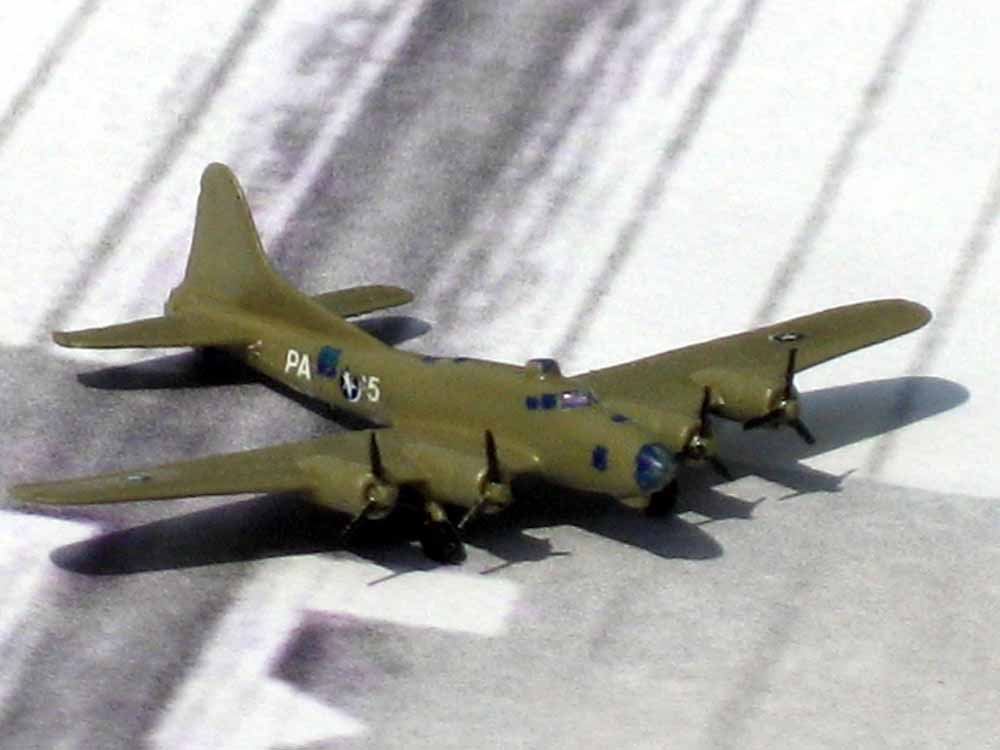
- Boeing B-17 Flying Fortress (1936-1959): WEM resin model with custom landing gear and nose art decal.
- Boeing B-29 Superfortress (1944-1960): Pitroad plastic aircraft with custom nose art and cockpit decals.
- Boeing B-36 Peacemaker (1949-1959): Pitroad white metal airctaft model. Custom cockpit window decals and propellers.
- Northrop XB-35 (1946-1949): Takara completed model
- Northrop YB-49 (1947): Takara completed model
- Convair B-58 Hustler (1950-1960): WEM resin model with custom landing gear and decals.
- Boeing B-52 Stratofortress (1955-present): Pitroad plastic aircraft finished in an H configuration.
- Rockwell B-1B Lancer (1986-present): Pitroad plastic aircraft with scratched cruise missile drum.
- Northrop B-2 Spirit (1997-present): Pitroad white metal aircraft with custom landing gear.
- Lockheed B-5 (2014- ): Scratchbuilt with custom decals. Inspiration for this bomber is from several pieces of Lockheed concept artwork depicting an idea for a stealth bomber. I built exactly to the concept aircraft. The B-5 is about 75% of the size of the B-1. I took the paintings (that depicted the aircraft from several angles) and created a line drawing to approximate the fairings and angles.
- Boeing BQ-10B (2020- ): Scratchbuilt with custom decals. BQ-10B is the USAF's first operational unmanned (UAV) penetration bomber and followed the BQ-10A that served as an operational testing version. Inspiration for this model is from artwork featured in a 2005 Aviation Week article on the future of unmanned aircraft. This aircraft is large: About 125% of the size of the B-1. The nose looks odd with only a refuelling recepticle and no cockpit windows. I suspect that UAV technology by then would allow for in-flight refuelling.
- USAF's Past & Future: B-17 and BQ-10B
John Sears

© ModelWarships.com