by Michael Maynard
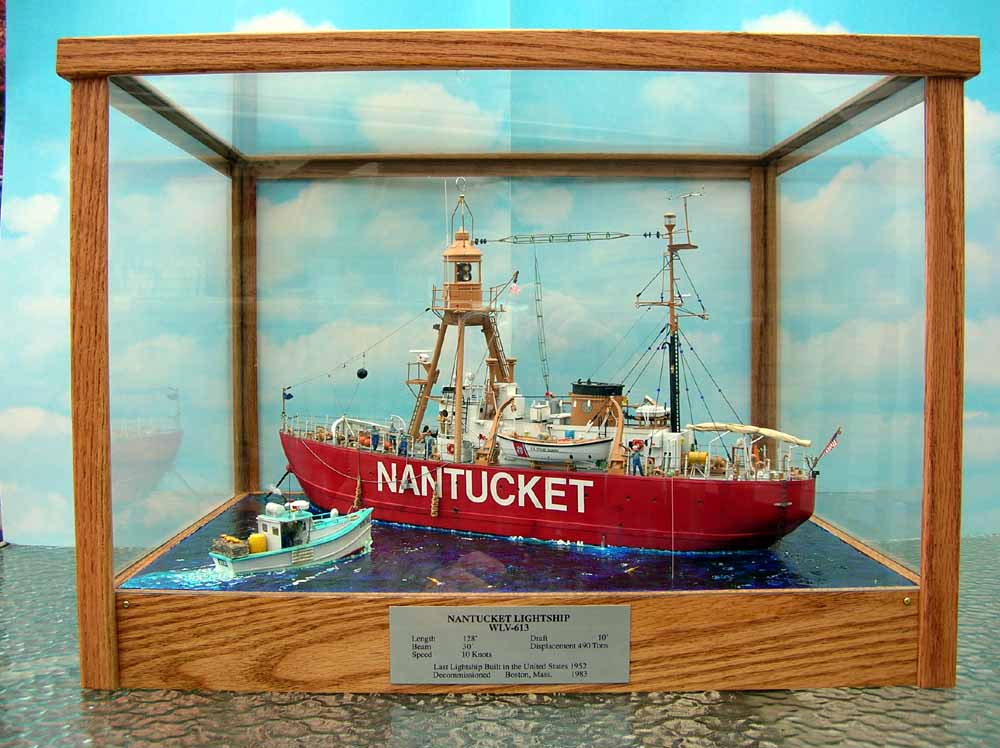
1/72 Nantucket Lightship WLV-613 (Scratchbuilt)
Lightship #613 was the last American lightship built in the United States. Commissioned in 1953, the 133 foot long “613” was lettered for AMBROSE light station guarding the approach to the shipping lane to New York City. In August 1960, while the “613” was in a shipyard undergoing normal dockside repairs, the freighter “GREEN BAY” rammed and sunk the relief lightship filling in for the AMBROSE. Luckily no lightship crewmen were lost on that foggy night but the relief lightship went down in 12 minutes. Lightship duty, no matter what the location, was inherently dangerous.
In 1967 Ambrose light ship was replaced by a large “Texas Tower” fixed light station and the “613” was transferred to Boston as the new First Coast Guard District lightship. In 1975 the last lightship station on the East coast of the United States was Nantucket Shoals and the “613” and her sister lightship, the “612”, became the last American lightships. Located 62 miles south of Nantucket island, the two lightships rotated the tour of duty on station every two months, braving hurricanes, endless weeks of fog, boredom and large New York bound merchant shipping that passed the lightship uncomfortably close. In 1934 the NANTUCKET was rammed by the liner OLYMPIC and went down taking half the lightship crew with it. During my tour we went to “abandon ship” stations many times as 500 foot long Russian fish processing ships would zero in on our radio beacon, changing course at a half mile before impact! I think our Soviet friends enjoyed giving us the business, they never responded to radio calls.
In 1983 technology finally caught up with the lightships and both vessels were replaced by a large automated buoy. The 613 and her sister, the 612, were de commissioned, ending 200 years of these off shore “floating lighthouses” that guarded America’s coast.
I had the “privilege” of serving as a cook on the “613” in the 1970’s. The duty was not “choice” and the joke was this: “What’s the difference between the Nantucket Lightship and the county jail? The jail can’t sink!” Confined to 133’ and with no TV or radio I was happy the day I received orders transferring off the ship. While I disliked lightship duty, I did like the appearance a lightship presented and thought this colorful ship would make a good model. I was able to procure a set of line drawings of the vessel from the ship’s engineering officer with the idea I’d build a model of the Nantucket one day. I used basswood in the “bread and butter” method of hull construction but decided that I wanted my model to be “on station” in it’s element. The masts were constructed of brass as were the capstans, water dam, railings, life lines, davits, vents and other details. The only commercial parts I used were life rings, light lenses, anchor chain flags and crewmen. The diorama depicts an actual event that occurred during my tour of duty. Lobster boats from the mainland would be two days from home and low on food. So they would request a trade for some bread and cold cuts for LOBSTER! The trash can would be put over the side and coming along side I would send down fresh baked bread, fresh sliced cold cuts(we had a deli meat slicer) hot sticky buns, milk and coffee. In turn they would load up the trash can with plenty of lobsters and I can attest we were all sick of this delicacy by the time a crewman was transferred out. This is the only model I’ve built that depicts me during my Coast Guard career. I wonder if other veterans build models with them “inserted” in a diorama. The model was airbrushed painted with actual Coast Guard “spar” and deck gray paint. The hull was painted with Rustoleum red and the superstructure painted Testors white. The “ocean” was joint compound painted with Tamiya clear green and blue. The hull and deck were mildly weathered, lightships were not allowed to be “rust buckets”, (as some folk like to depict their models) our skipper kept the crew busy scrapping, sanding and painting. After all, we had a lot of “free” time on station.
